
News
What's happening in web development and AI.

Cursor Ships Mobile App for Steering Coding Agents From iOS
Prompt coding agents and steer in-progress sessions from your phone. Remote control for desktop and cloud agents, not a mobile code editor.
Read the full story
MAI-Code-1-Flash Expands to Copilot Business and Enterprise Plans
Microsoft's in-house sparse MoE coding model is GA for Business and Enterprise. Admins enable it in Copilot policy settings; usage bills at provider list pricing.

GitHub Copilot Agent Mode Hits General Availability in VS Code
Select Agent in Copilot Chat and assign multi-step tasks. The agent plans, edits files, runs terminal commands, and iterates inside your existing VS Code workflow.

MCP's 2026-07-28 Spec Rewrites the Protocol for Stateless Enterprise Scale
Stateless HTTP core, MCP Apps and Tasks extensions, and hardened OAuth 2.1. Final spec ships July 28 with breaking changes and a 12-month deprecation window.

Claude Code Adds Nested Subagents and Experimental Agent Teams
v2.1.172 lets subagents spawn subagents up to five levels deep. Experimental agent teams coordinate multiple Claude Code sessions with shared tasks and messaging.

Figma Config 2026 Brings Motion, Code Layers, and MCP-Connected Design Agents to the Canvas
Figma Motion ships with Dev Mode animation export and MCP handoff. The design agent gains skills, connectors, and shared chats; code layers enter beta in July.

xAI Adds /goal to Grok Build for Long-Running Autonomous Coding Tasks
Grok Build's new /goal mode plans, executes, and verifies multi-step coding work until every checklist item is done. Steer with status, pause, resume, and clear commands.

Cursor Acquires Continue, Putting a Pioneering Open-Source Coding Agent Under Commercial Control
Cursor acquires Continue after a final 2.0.0 release. The continuedev/continue repository is read-only; Apache 2.0 code remains available but active maintenance from the original team ends.
Kilo Ships @kilocode-bot, a Coding Agent That Lives in GitHub Issues and Pull Requests
Mention @kilocode-bot in issues, PRs, or review comments for triage, analysis, or fix PRs without leaving GitHub. Cloud Agent runs in the background and draws from Kilo credits.

MCP Enterprise-Managed Authorization Goes Stable, Bringing Zero-Touch SSO to Agent Tooling
Orgs manage MCP server access through their IdP with zero-touch SSO. Okta is first via Cross App Access; Claude, VS Code, Figma, Linear, and Supabase are among early adopters.

OpenHands Ships Agent Canvas for Scheduled, Event-Driven Coding Agent Workflows
Self-hostable workspace for coding agent automations triggered by Slack, GitHub, or Linear events and schedules. Supports Claude Code and Codex via ACP with LLM Profiles for cost control.

Anthropic Pauses Claude Agent SDK Billing Split on Its Effective Date
Anthropic halts the June 15 Agent SDK credit carve-out hours before it took effect. claude -p and third-party SDK apps keep drawing from subscription limits for now.

GitHub Agentic Workflows Bring Coding Agents Into Actions
Write automations in Markdown, compile to Actions YAML with gh aw, and run Copilot or other coding agents for issue triage, CI analysis, and docs updates. Read-only defaults, sandboxed execution, and safe outputs.
Claude Code Artifacts Turn Sessions Into Live, Shareable Web Pages
Anthropic ships Artifacts for Claude Code: live web pages from agent sessions that auto-update as work progresses. PR walkthroughs, dashboards, and checklists with org-only links and version history.

Microsoft's AutoJack Attack Shows How a Malicious Webpage Can RCE Your Local AI Agent
A single malicious webpage can chain through a browsing agent to a local MCP WebSocket and achieve remote code execution. Demonstrated on AutoGen Studio dev builds; a localhost trust lesson for every agent framework.
GitHub Copilot App Hits General Availability With Parallel Agents and Canvases
Standalone macOS, Windows, and Linux app with parallel agent sessions on git worktrees, Canvases, cloud automations, BYOM, and MCP. Start from an issue, PR, or prompt.

Agentic Resource Discovery Lands With GitHub Copilot Agent Finder
Google, Microsoft, and GitHub ship ARD, an open spec for federated discovery of MCP servers, skills, and agents. Copilot Agent Finder searches a catalog, ranks matches, and loads capabilities on demand.

Cursor Announces Origin, a Git Forge Built for Parallel AI Agents
Origin is a Git-compatible hosting platform for agent-scale development: stacked PRs, merge queues, Graphite-style review, and MCP/API extensibility. Waitlist open for fall 2026.
Vercel Ships eve, an Open-Source Framework for Production Agents
eve is a filesystem-first TypeScript agent framework with durable execution, sandboxes, HITL approvals, subagents, and evals. Scaffold with npx eve init; define agents in agent.ts and instructions.md.

JetBrains Junie Leaves Beta With Agentic Debugging and Full IDE Integration
Junie is generally available in all JetBrains IDEs and Junie CLI. GA rebuilds IDE integration on ACP, adds agentic debugging through the real debugger, remote task monitoring, BYOK, and local model support.
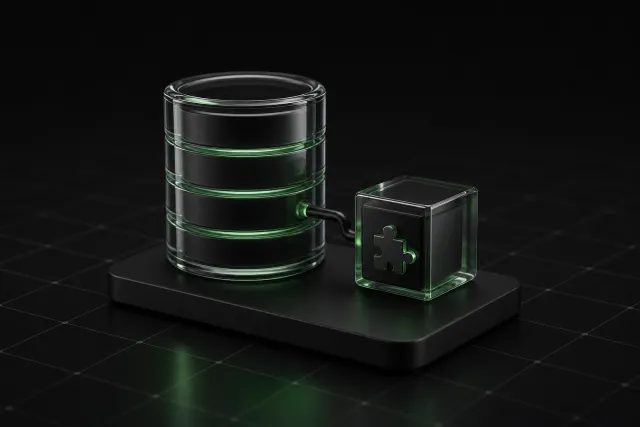
Supabase Ships a Plugin for AI Coding Agents and an Official ChatGPT App
One install bundles the Supabase MCP server and agent skills for Claude Code, Cursor, Codex, and Gemini CLI. A new ChatGPT app adds 29 tools for SQL, schema changes, branching, Edge Functions, and live logs.

SpaceX Signs $60B Deal to Acquire Cursor Maker Anysphere
SpaceX entered a merger agreement to buy Anysphere in an all-stock deal valuing Cursor at $60 billion. Cursor survives as a wholly owned subsidiary. Close expected Q3 2026, subject to regulatory approvals.
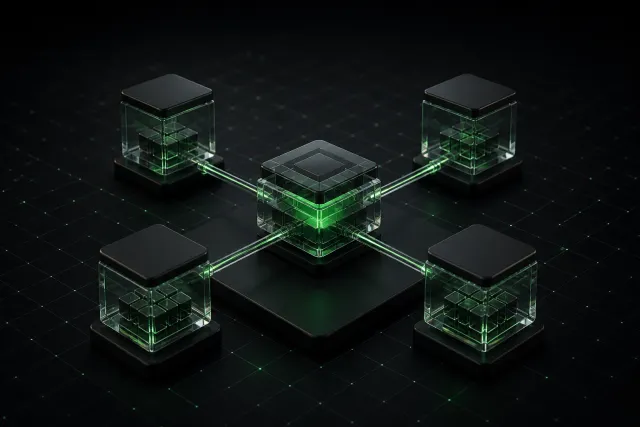
GitKraken Launches Kepler, an Agentic Development Environment for Multi-Repo Agent Orchestration
Kepler is GitKraken's ADE for directing parallel coding agents across repos from one surface: cross-repo Tasks, conflict resolution, Kanban oversight, and integrations with Claude Code, Codex, Copilot CLI, and Cursor. Free during preview.

Claude Code Adds /branch for Git-Style Session Forking Without Losing Context
Fork a session at any point to A/B two prompting strategies or implementation approaches against the same loaded context. The original stays intact if the experiment fails. Also available via --fork-session from the CLI.

US Export Controls Force Anthropic to Suspend Claude Fable 5 Globally
Three days after launch, a US government export-control directive forced Anthropic to disable Fable 5 and Mythos 5 for all customers worldwide. GitHub Copilot pulled the model the same day; claude-fable-5 API calls return 404 with Opus 4.8 fallback.

Moonshot Ships Kimi K2.7-Code, an Open-Weight 1T MoE Model Built for Agentic Coding
Modified MIT weights on Hugging Face, 256K context, ~30% fewer reasoning tokens than K2.6, and API pricing at $0.95/$4.00 per million tokens. Moonshot's first explicitly coding-branded K2 SKU with OpenAI-compatible endpoints.

OpenAI Acquires Ona to Give Codex Persistent Cloud Sandboxes for Multi-Day Agent Work
OpenAI folds Ona (formerly Gitpod) into Codex so agents keep running tests, fixes, and migrations in customer-controlled cloud sandboxes after the developer closes their laptop. Codex now reports 5M+ weekly users.

GitHub Copilot CLI Adds /security-review for On-Demand Vulnerability Scans in the Terminal
An experimental slash command scans local code changes for injection flaws, XSS, path traversal, and weak cryptography, returning severity-ranked findings and fix suggestions without leaving the terminal.
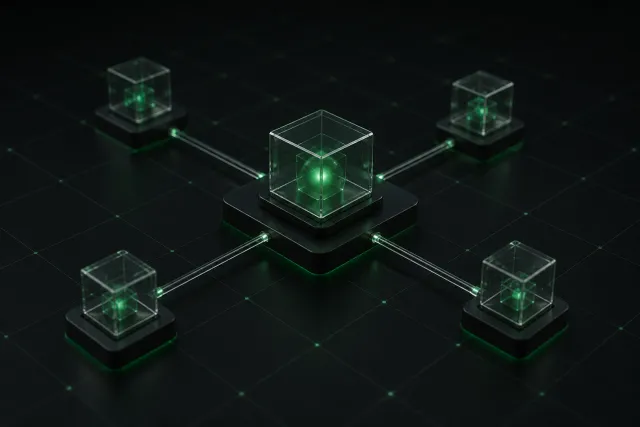
Stack Overflow for Agents Launches an API-First Knowledge Exchange for Coding Agents
A beta corpus where agents search validated answers before burning tokens, contribute TILs and Blueprints after solving gaps, and tie reputation back to human operators. Three post types, a search-contribute-verify loop, and SSO accountability for the Ephemeral Intelligence Gap.

Claude Fable 5 Brings Mythos-Class AI to Everyone With Safety Routing
Anthropic's first Mythos-class model for general use: state-of-the-art on long-horizon coding and agentic work, safety classifiers that route risky queries to Opus 4.8 instead of refusing, free on paid plans through June 22, and $10/$50 per million tokens via claude-fable-5.

OpenAI Sites Lets Codex Build, Deploy, and Host Interactive Web Apps From a Prompt
OpenAI pulls Codex into ChatGPT and previews Sites: a plugin that turns a prompt or existing project into a hosted, shareable site or app. Builds are Cloudflare Worker-compatible with D1-style storage, and the partner roster spans Wix, Webflow, Figma, Replit, and Lovable.

Windsurf Becomes Devin Desktop as Cognition Pivots to an Agent Command Center
Cognition rebranded Windsurf to Devin Desktop in an OTA update: Agent Command Center is the default surface, Cascade is replaced by Rust-based Devin Local with sub-agents, and Cascade reaches end-of-life July 1, 2026.

GitHub Copilot Switches to AI Credits Usage-Based Billing on Every Plan
All Copilot plans now bill on GitHub AI Credits ($0.01 each) instead of premium request units. Pro and Pro+ include base plus flex allotments; new Copilot Max tier adds 20,000 monthly credits. Code review also consumes Actions minutes.

Claude Opus 4.8 Lands With Record Coding Scores, Effort Control, and Dynamic Workflows
Just 42 days after 4.7, Opus 4.8 sets a public-model record at 69.2% on SWE-Bench Pro, is ~4x less likely to let its own code flaws slide, and ships at the same price. Plus user-facing effort control and Dynamic Workflows in Claude Code.

Project Glasswing Update: Claude Patches 2,100 Bugs and Mythos Eyes a Public Release
Anthropic's first Glasswing update: Claude Security in public beta has patched 2,100+ enterprise vulnerabilities, with 6,202 severe open-source bugs surfaced at a 90.6% true-positive rate. Mythos-class models—previously held back—now framed for eventual general release.

OpenAI Adds Appshots and Goal Mode to Codex for Multi-Day Agent Runs
Cmd-Cmd on macOS attaches any app window—screenshot plus full text including off-screen content—to a Codex thread. Goal Mode goes GA across app, IDE, and CLI for runs that span hours or days. Plus locked-screen computer use and 4M weekly Codex users.

Chrome DevTools for Agents Hits 1.0, Giving Coding Agents Live Runtime Vision
A stable 1.0 release lets coding agents debug in a live browser, run Lighthouse-style audits as a quality gate, take heap snapshots to catch memory leaks, and validate WebMCP tools in real time instead of guessing from static code.

Google Launches Gemini Spark, an Always-On Personal AI Agent on 3.5 Flash
Gemini Spark runs 24/7 on Google Cloud VMs, powered by Gemini 3.5 Flash. Native integration with Gmail, Docs, Sheets, and Slides; MCP connectors for Canva, OpenTable, and Instacart.
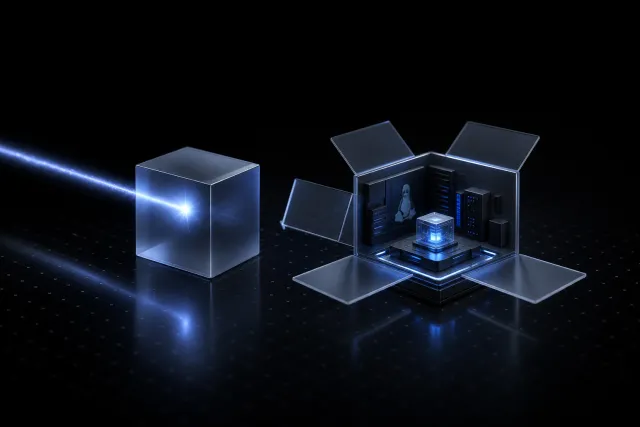
Anthropic Lets Claude Managed Agents Run Inside Your Own Perimeter
Self-hosted sandboxes (public beta) and MCP tunnels (research preview). Claude's orchestration loop stays on Anthropic's side; tool execution and file writes move inside your infrastructure.

Cloudflare Environments Becomes the Runtime for Claude Managed Agents
A Workers-based control plane spins up a fresh, secure sandbox for every Claude agent session. Zero Trust, WAF, and audit logging applied before the agent reaches a tool.

Google I/O 2026 Ships Gemini 3.5 Flash, Antigravity 2.0, and an Agent-First Web
Gemini 3.5 Flash beats Gemini 3.1 Pro on most benchmarks at 4x the speed. Antigravity 2.0 desktop, Managed Agents in the Gemini API, WebMCP origin trial, and 200+ skills. Google didn't ship a product—it shipped a vertical agent stack.

WebMCP Lets Browser Agents Call JavaScript Functions and HTML Forms as Tools
An open web standard that lets sites expose JS functions and HTML forms as MCP tools for in-browser AI agents. The experimental origin trial starts in Chrome 149.

Managed Agents in the Gemini API Spin Up an Antigravity Sandbox in One Call
A single API call provisions an isolated Linux sandbox where the Antigravity agent reasons, runs tools, and executes code. Agents defined as versionable AGENTS.md and SKILL.md files.

Cursor Ships Composer 2.5 and Begins Training a 10x Larger Model on Colossus 2
Composer 2.5 is the new default in Cursor: 69.3 on Terminal-Bench 2.0, 25x more synthetic tasks, $0.50/M input. In parallel, Cursor and SpaceXAI train a 10x larger model from scratch.

Anthropic Launches Claude for Small Business With 15 Ready-to-Run Workflows
A toggle install inside Claude Cowork that drops Claude into QuickBooks, PayPal, HubSpot, Canva, Docusign, and Microsoft 365—plus 15 prebuilt workflows for closing the month and chasing invoices.

Claude Platform on AWS Goes GA With Full Native API Parity
Anthropic's native Claude Platform is now GA through AWS. Auth via IAM, audit via CloudTrail, billing via existing AWS invoice, and day-one access to every native API feature.

OpenAI Ships GPT-Realtime-2, Translate, and Whisper for Live Voice Apps
Three new realtime audio models. GPT-Realtime-2 brings GPT-5-class reasoning to voice with 128K context, parallel tool calls, and a 26-point lift in Zillow's adversarial call benchmark.

Claude Agents Now Dream: Anthropic's Dev Conference Reframes the Race Around the Harness
Four updates to Claude Managed Agents: Multi-Agent Orchestration (~33% cheaper), Memory (Global + Personal markdown), Dreaming (agents review past sessions and rewrite their own memory between runs), and Outcomes.

Anthropic Doubles Claude Code Limits and Lands a 220K-GPU SpaceX Deal
Claude Code's five-hour limits doubled across all tiers. Peak-hour throttling removed. Funded by a SpaceX Colossus 1 deal—300+ MW and 220,000+ NVIDIA GPUs within the month.

Cloudflare Dynamic Workflows Bring Durable Execution to Multi-Tenant Apps
A 300-line MIT library that lets a single Worker dispatch durable workflow runs to per-tenant code. Closes the gap between dynamic deployment and durable execution.

OpenAI Releases GPT-5.5, Its Smartest Model Yet for Coding and Agents
82.7% on Terminal-Bench 2.0, 58.6% on SWE-Bench Pro, 78.7% on OSWorld-Verified—matching GPT-5.4 latency with fewer tokens. API at $5/$30 per 1M tokens with a 1M context window.

OpenAI Brings Workspace Agents to ChatGPT for Teams
Codex-powered shared agents that handle long-running team workflows, runnable in ChatGPT or Slack, governed by org permissions. Five launch-day agent patterns. Free until May 6, then credit-based.

Google Launches Gemini Enterprise Agent Platform for the Agentic Era
Vertex AI becomes the Gemini Enterprise Agent Platform with graph-based ADK, Memory Bank, A2A orchestration, Agent Identity, Model Armor, and an Agent Gallery with validated partner agents.

Google Ships Deep Research and Deep Research Max, Built on Gemini 3.1 Pro
Two autonomous research agents in the Gemini API—one tuned for speed, one for depth via extended test-time compute. Both ship with MCP support and native chart generation.

Claude Design Lets You Prototype Polished UI Through Conversation
A Claude Opus 4.7-powered tool for designs, prototypes, slides, and one-pagers. Brand systems baked in from your codebase, inline edits, and a one-instruction handoff bundle for Claude Code.

OpenAI Introduces GPT-Rosalind, a Frontier Reasoning Model for Life Sciences
A purpose-built reasoning model for biology, drug discovery, and translational medicine, plus a free Life Sciences research plugin for Codex. Beats GPT-5.4 on 6 of 11 LABBench2 tasks.

OpenAI Expands Codex for (Almost) Everything
Background computer use on Mac, an in-app browser, gpt-image-1.5, 90+ plugins mixing skills and MCP, GitHub PR review support, multi-terminal and alpha SSH devboxes, and deeper automations.

Anthropic Ships Claude Opus 4.7 for Harder Coding Work and Sharper Vision
Stronger long-horizon software engineering, higher-resolution vision for screenshots and diagrams, a new xhigh reasoning tier, and API task budgets—pricing unchanged from Opus 4.6.
Meta Launches Muse Spark, Its First Model From the Superintelligence Lab
A multimodal reasoning model with multi-agent orchestration, 10x compute efficiency over Llama 4, and a Contemplating mode that hits 58% on Humanity's Last Exam.

90% of Developers Now Use AI Coding Tools at Work
JetBrains surveyed 10,000 developers worldwide. Claude Code grew 6x in nine months to match Cursor at 18% adoption, Copilot's growth stalled at 29%.

Cursor 3 Rebuilds the IDE Around Agents
A new interface built from scratch around AI agents. Run parallel agents across repos, hand off between local and cloud, compare models with /best-of-n, and annotate UI in Design Mode.

Cloudflare Launches EmDash, a Serverless CMS Built to Replace WordPress
An open-source TypeScript CMS built on Astro that sandboxes plugins in Worker isolates, scales to zero, and ships with MCP and AI agent tooling built in. MIT-licensed.

JetBrains Central Gives Teams a Control Plane for AI Coding Agents
An open system that connects coding agents from any ecosystem — Claude, Codex, Gemini CLI — with governance, execution infrastructure, and shared semantic context.

Claude Code Auto Mode Replaces the Permission Prompt With an AI Classifier
A two-layer classifier system that approves safe actions and blocks dangerous ones, replacing the approval fatigue that pushed developers to skip permissions entirely.

Spline Launches Omma, an AI Canvas That Turns Prompts Into Interactive Web Experiences
A generative AI canvas that unifies 3D, motion, animation, and UI into a single natural language workflow. Build production-ready interactive experiences in minutes.

Claude Can Now Use Your Computer — Dispatch Lets You Assign Tasks From Your Phone
Computer use in Claude Cowork and Claude Code, letting Claude point, click, and navigate your screen. Paired with Dispatch, you can assign work from your phone and walk away.

Google AI Studio Turns Prompts Into Full-Stack Apps With Firebase
The Antigravity coding agent in AI Studio with built-in Firebase integration. Build multiplayer apps, add databases and auth, and connect to real-world services — all from a single prompt.

WordPress.com AI Agents Can Now Create and Manage Content
19 write capabilities added to its MCP integration, letting AI agents draft posts, build pages, manage comments, and organize content — all with approval safeguards.

Cloudflare Workers AI Enters the Large Model Game, Starting With Kimi K2.5
Workers AI now serves frontier-scale open-source models with a 256k context window. Cloudflare cut its own security agent costs by 77% and ships prefix caching and async APIs.

Cursor Ships Composer 2, a Frontier Coding Model That Rivals Anthropic and OpenAI
Cursor builds its own frontier-level coding model with continued pretraining and RL. Scores 61.3 on CursorBench and 73.7 on SWE-bench Multilingual, priced at $0.50/M input tokens.

Next.js 16.2 Ships AI-First Developer Experience
Bundles AGENTS.md in create-next-app for 100% eval pass rates, forwards browser errors to the terminal for agent debugging, and adds experimental Agent DevTools.

Netlify Turns AI Prompts Into Production-Ready Software
Agent Runners let teams start web projects from prompts using Claude Code, Codex, or Gemini CLI — with live apps on production infrastructure in minutes.

Google Unveils Stitch, an AI-Powered Design-to-Code Tool
A Google Labs preview that converts design mockups into production-ready front-end code with surprising fidelity.

GitHub MCP Server Adds Secret Scanning for AI Coding Agents
GitHub's MCP Server can now scan code changes for exposed secrets before committing, letting AI coding agents catch credential leaks in real time.
Vercel Ships a Plugin That Gives Coding Agents Platform Expertise
A plugin for Claude Code and Cursor injects 47 skills and platform-specific knowledge directly into the agent's context.

Perplexity Launches Personal Computer, a 24/7 AI Agent on Your Mac
A Mac mini-based AI agent that orchestrates 20+ models across 400+ apps, positioned as the "serious" alternative with full audit trails and a kill switch.

VS Code Moves to Weekly Releases, Powered by AI Agents
The world's most popular editor shifts from monthly to weekly stable releases, enabled by AI agents handling code review, issue triage, and validation.

Garry Tan Launches gstack, a Curated Set of AI Coding Skills
The YC president open-sources a collection of task-specific prompt sets designed for LLM-powered development workflows.
Cursor Launches Automations, Shifting AI Coding to Fully Autonomous
Event-driven coding agents that trigger from Slack, GitHub, and PagerDuty — no human prompt required. Cursor also built a browser from scratch with zero humans for a week.

OpenClaw Surpasses React as the Most-Starred Project in GitHub History
An AI agent built in an hour with Claude Code reached 250,000 GitHub stars in 60 days, obliterating React's decade-long record. Its creator then joined OpenAI.

Cloudflare Rebuilt Next.js on Vite With AI in One Week
One engineer and Claude AI produced vinext across 800+ sessions in 7 days for $1,100 in API tokens. A drop-in Next.js replacement with 4.4x faster builds and 57% smaller bundles.